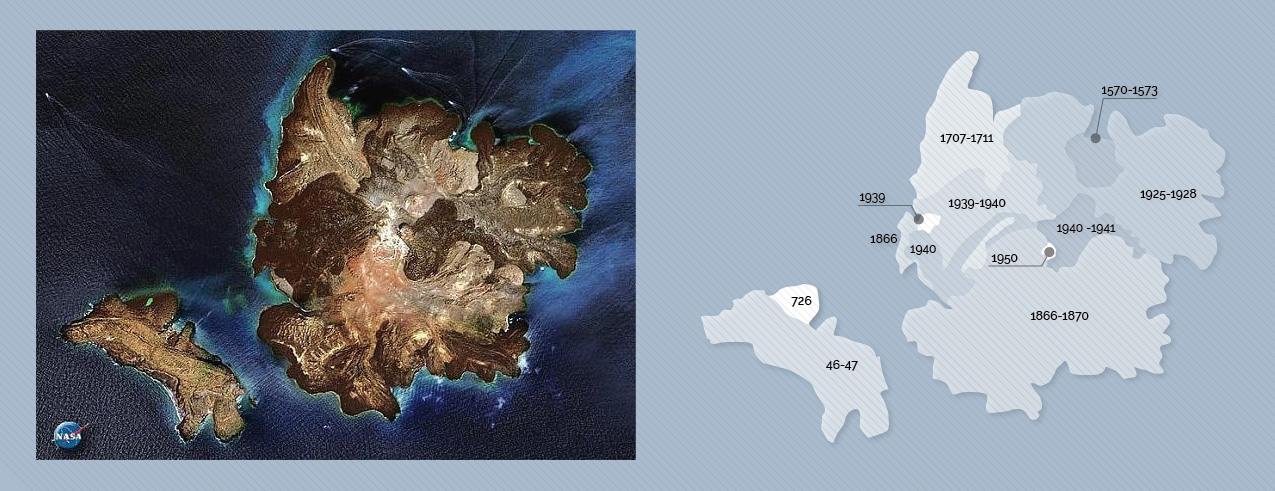
Santorini Volcano
One of the largest volcanic eruptions in the past 10,000 years occurred in approximately 1620 BC on the volcanic island of Santorini in the Aegean Sea.
Prior to 1620 BC, the island of Santorini, now known as Thera, was built up by layers of lava created by overlapping shield volcanoes, and it had experienced three significant eruptions that formed overlapping calderas, or collapsed magma chambers. Around 1620 BC, the fourth (and latest) major eruption created the present-day islands and caldera bay of Santorini Volcano.
Following the 1620 BC eruption, much of the previous island of Santorini was destroyed or submerged; The eruption was a major factor of the destruction of the classical Minoan civilization of Crete.
The most recent volcanic activity in the Kameni islands occurred in 1950, and included some small explosions and production of lava. Today, volcanic activity is closely monitored by the Institute for the Study and Monitoring of the Santorini Volcano.
Volcano Eruptions
A timeline of how the volcanic islands were formed